For most of the last three months I’ve been in Japan.
Kamiyama was the first place I stayed. It’s a shrinking mountain valley in Tokushima Prefecture, where a nonprofit has been pioneering creative approaches to depopulation. I spent a month there learning what it means to tend community — with and without digital tools.
With the essay that follows, I tried something I’ve never done before: a video essay. It’s imperfect and I learned a lot making it and had a lot of fun.
Video: 19 minutes. Written essay: 13-15 minutes.
When things get cold, citrus becomes sweeter.
Somewhere in the mountains of Shikoku, Japan’s smallest main island, a valley is folded into the landscape. In this valley is a small town, known as Kamiyama.
Around 1955, the population of Kamiyama was roughly 21,000. By the early 1990s, it was a fraction of that and still falling. You can see it before anyone tells you. Citrus trees in people’s yards, heavy with fruit that no one’s left to pick. Terraces carved into hillsides for rice generations ago, now growing whatever the wind blows.
In the early 1990s, workers renovating a school found a doll named Alice with blue eyes in a wooden box. It was one of nearly 13,000 sent from the United States to Japan in 1927 as a peace gesture.
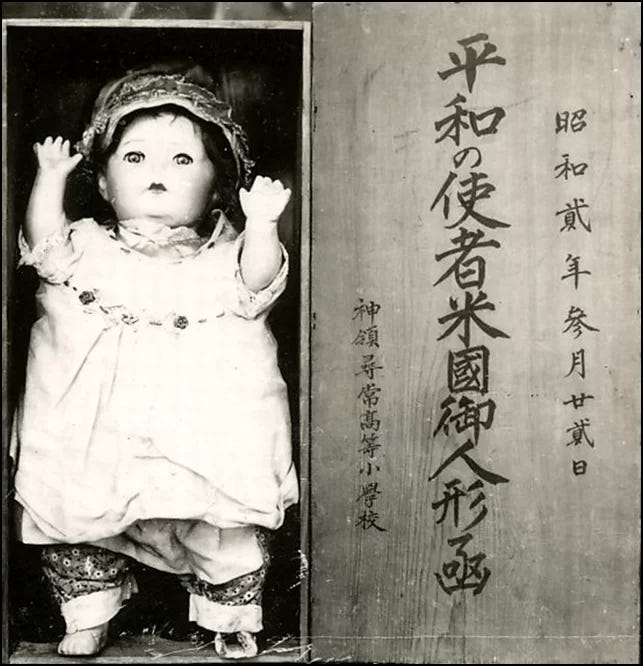
When the Pacific War began, nearly all were destroyed.
A group of people returned Alice to the sender’s relatives in Pennsylvania. Nobody asked them to do this. It was a small, relational, arguably pointless gesture. But it gave people in a shrinking town the experience of accomplishing something together. And that experience became the seed of everything that followed.
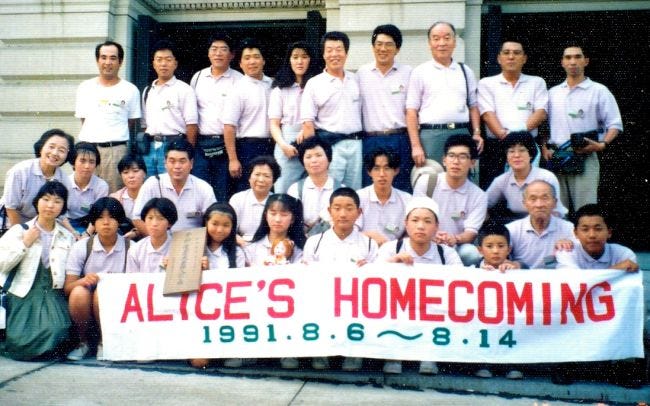
That group became an organization called Green Valley.
They started an artist residency. The residency drew architects. The architects drew tech workers. The tech workers drew a tuition-free boarding school funded by tech companies like Sony and Mixi. All of this to a town of 5,000 people accessible by two small mountain roads. No one designed this sequence. But it wasn’t random either. Each step grew from the last because someone had tended the conditions for it.
Ominami Shinya, one of the people who returned Alice, gave this process a name: Creative Depopulation. An acceptance that the population of Kamiyama would keep shrinking paired with the intention to shape who remained and how they lived together.
That story told that way is what drew me to Kamiyama. I was halfway through a Watson Fellowship year exploring how social technology shapes community; how the tools people use to connect either serve them or don’t. I’d been reading about the town for months.
Online, Kamiyama is often written about as if it has something figured out. Articles with titles like Kamiyama’s Success in Creative Depopulation, or Mountain Town in Japan Becoming Hub for IT Firm’s Satellite Offices, painted a picture of a small town that cracked the code on how to embrace population decline by leaning into technology.
My first contact in Kamiyama was Shota-san, who had left a machine learning job at Apple eight months ago to work for Green Valley. On my first night in late December, he and Itou-san, a long time Green Valley employee, picked me up and drove me to the community’s famed co-working space. It’s a clean, white-walled, blonde wood interior with a big barrel wood stove in the center that reminded me of the ones I knew growing up.
They also took me to Kamiyama’s roadside station, where local farmers drop bins of their produce every few days. I bought some mikan (mandarin orange). From then on, there was no shortage of mikan. People I’d meet everywhere would have some lying around in press a few into my hands on the way out.
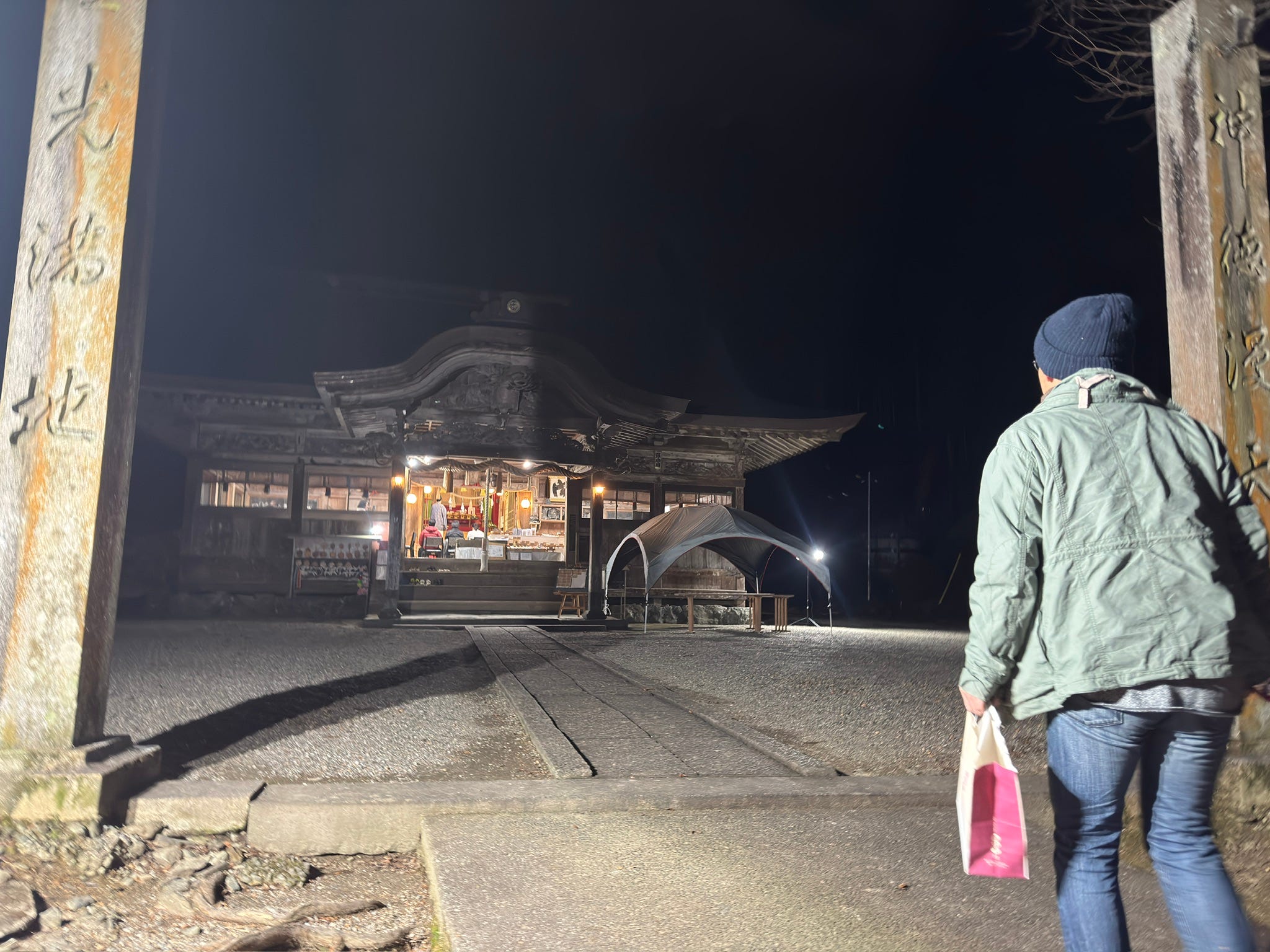
I spent that New Year’s Eve with Itou-san at the thousand-year-old shrine above the town, shaking. I did not expect Kamiyama to be so cold. The houses in the valley are old and uninsulated wooden frames that let the mountain air pass through them like a rumor. You feel the cold in your joints before you feel it on your skin. I slept in nearly every layer I had. The little coil heater ran all night and I could see my breath in the kitchen cooking breakfast.
I think the cold is what pushes you toward other people. The community onsen became my second home. 680 yen. Stripped down, the schoolteacher and the farmer and the American with little Japanese are all just bodies in heat. I went every evening. After two weeks, other regulars started asking my name. We communicated in fragments that became fuller with every visit.
Going to the onsen every evening became one of the rhythms I loved most. The front desk matched your locker to your height. Sometimes I’d get the same one and it felt like the building recognized me. The minty sting of the soap, the heat loosening something behind my ribs, the cold plunge, the gasp, the balcony where I’d stand cooling in the night air while the river moved below.
The onsen wasn’t doing anything innovative. It was just there. Every day, same price, same steam rising off the same surface. The community didn’t happen despite the routine. It happened inside of it.
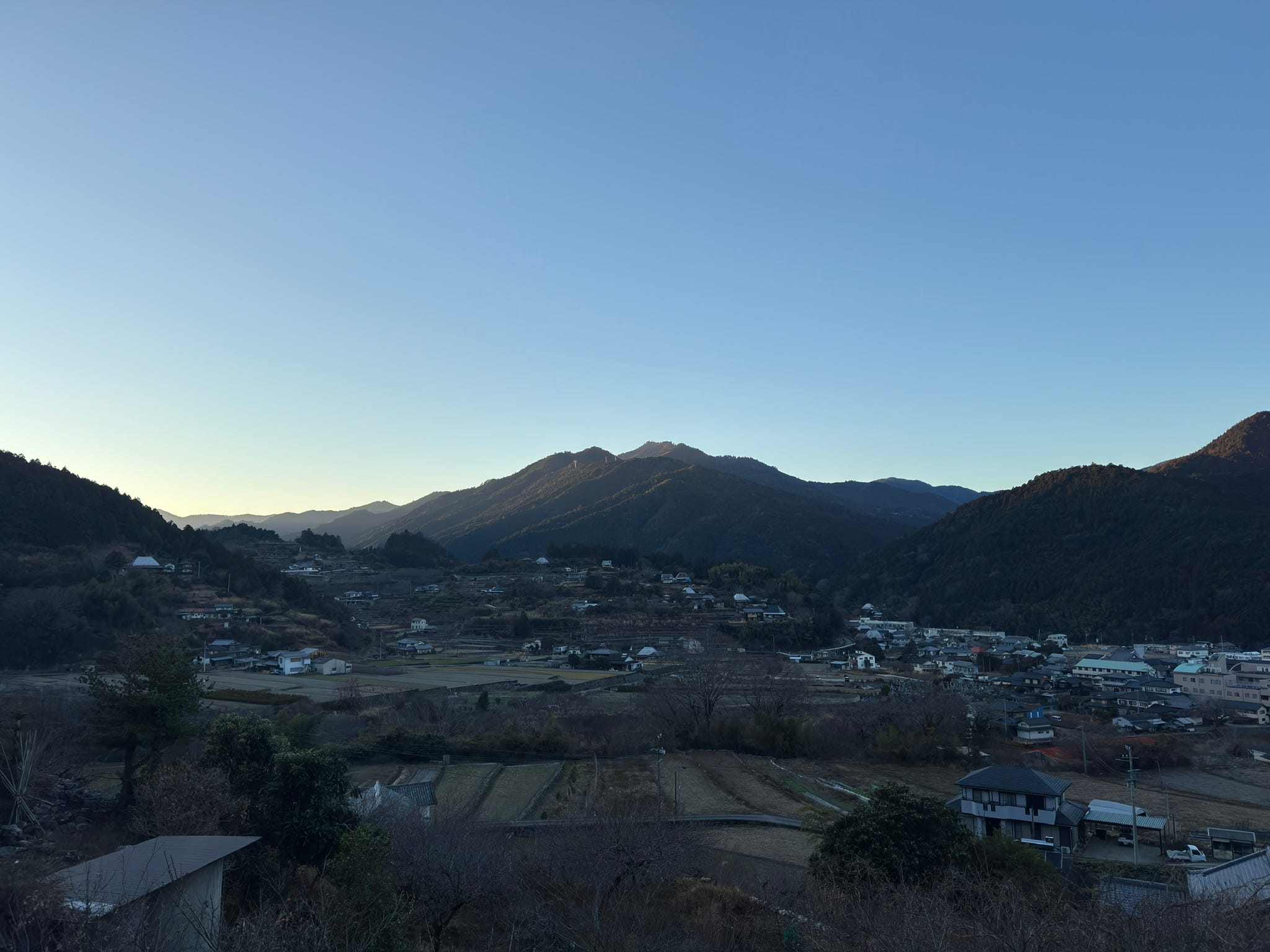
The actual valley was quieter than the articles. Colder. More ordinary. People went to work and came home and ate hot pot and went to the onsen.
I spent months before Japan reading Sherry Turkle, Elinor Ostrom, Ivan Ilich. Thinkers who’d shaped my understanding of what technology does to communities and what communities can do with technology.
I arrived expecting to see some of these ideas in action. Instead, I was seeing a small town doing its best with what it had.
This was the first surprise. The second was Nikolai.
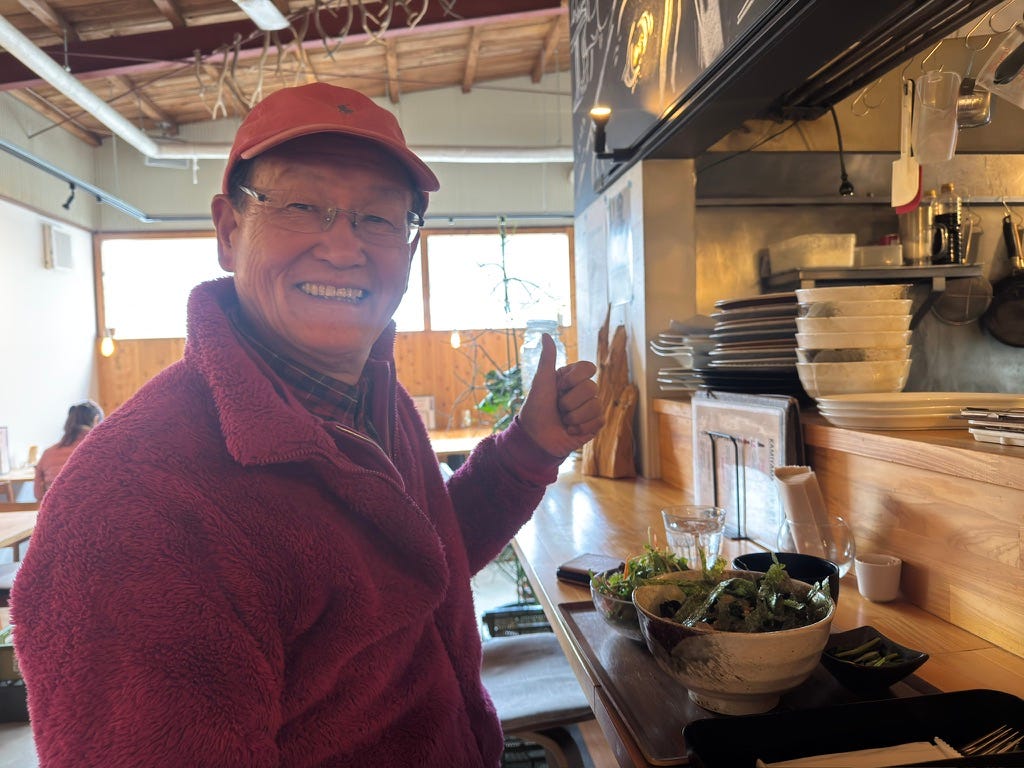
Nikolai grew up in Kamiyama. He loves the town. A highway construction project forced the demolition of his house and he moved to the city 45 minutes away with his wife. In the city, Nikolai goes unnoticed. Not because he’s a recluse, but because he’s not wearing pink. When he comes back to Kamiyama, which he does a lot, full pink outfit. That’s how he’s known.
Nikolai Mail is an email list he started 10 years ago because he thought the town needed one. Just a list where residents share what’s happening via email. Persimmons for Sale, a mochi making class, a festival reminder. It exists inside the community it serves and nowhere else.
To join, Nikolai likes to meet you first. Face to face. A boundary that makes the space feel like the place. If he adds you, you get an introductory email explaining the rules. The main one. Do not press reply. Because it sends to everyone in the group. I made this mistake after skimming my introduction email. Oopsies.
Other residents write to the list too. But Nikolai is by far the most prolific voice. The one whose consistency sets the rhythm. Like the onsen, what makes it work isn’t the technology. It’s that someone keeps showing up. Nikolai’s reliability gives other people permission to participate.
I finally met the guy at a dry stone walling workshop. I had my head down searching for just the right size stone when somebody shouted, “Dan-kun! There he is!” I looked up and was blinded by a pink.
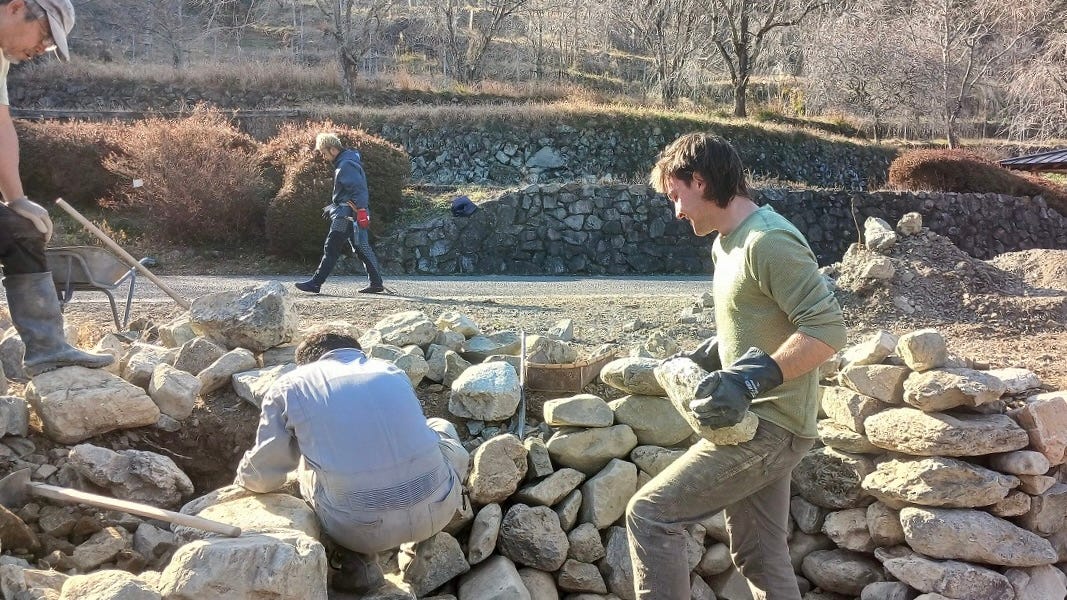
With big grins, we exchanged fragments of mutually intelligible English and Japanese. The next day, on Nikolai Mail, there was Nikolai’s account of our exchange below a photo: “The unfamiliar person next to Ryoko is Dan, who is from Portland, USA. Dan is very friendly. Dan said, ‘I came here because I wanted to meet you, Nikolai.’”
At the stonewalling workshop, he invited me to a trash cleanup. In the email, he added, for the whole town: “Dan said he would come to help, but I’d wondered if that was true. I left wondering if he would even know where to go.”
I showed up the next morning, cycled 30 minutes in the cold. Nikolai reported that too, noting, with mild surprise, that the American actually came. In his event recap, he documented the record-breaking amount of garbage, the “devil knots” on discarded plastic bags, the group photo where he made newcomers pose like characters from Kiki’s Delivery Service.
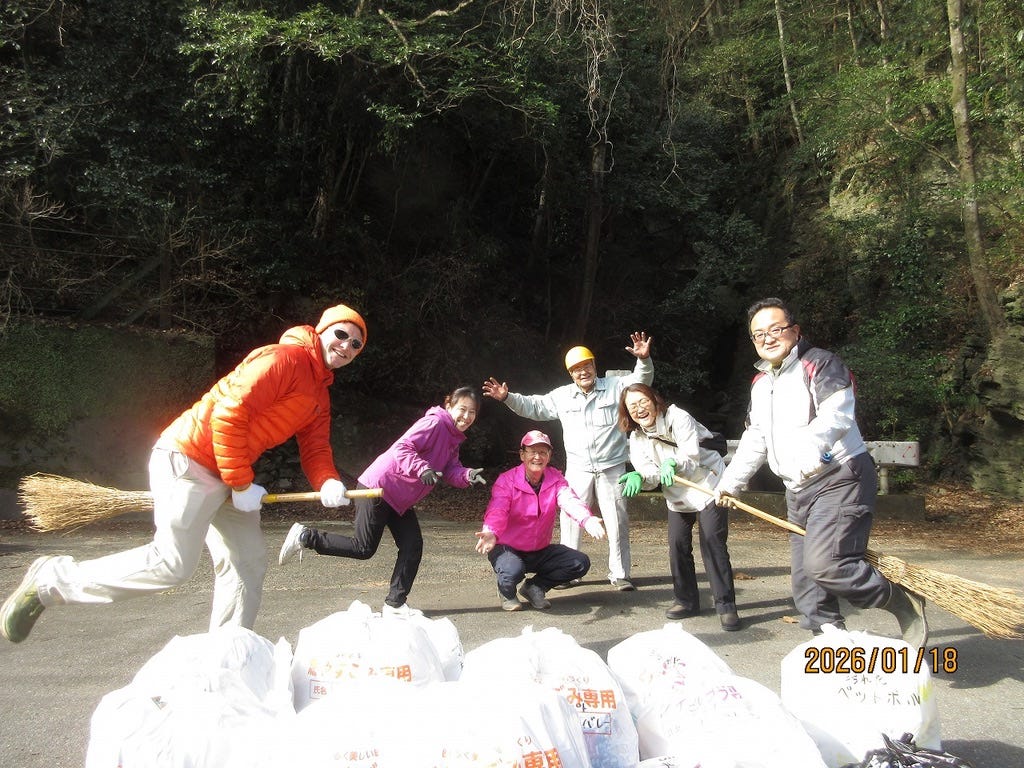
Nikolai is just a man in pink who keeps showing up. Nikolai Mail runs on email, Gmail, Yahoo, whatever people already use. Nobody has to download anything. The infrastructure is already there. Nikolai just started a practice on top of it.
He is also one of the most frequent contributors to in Kamiyama, the town’s long-running website and repository of valley life. Between the site and the email list, Nikolai has probably documented more of Kamiyama than anyone.
Creative depopulation isn’t building a new town. It’s figuring out how to live well in houses that were built long ago, on roads that were already cut in a valley that already exists. The whole project is a practice on top of what was already provided. Nikolai Mail has that same texture.
Then there was Circle, the organization I’d come originally wanting to help.
Circle developed an app to centralize information and services for residents, particularly the elderly. They distributed tablets, they launched a YouTube channel, posting videos about twice a week, seasonal recipes, town events, interviews with residents, surprisingly well produced for a town of 5,000. From the outside, Circle looked exactly like the kind of intentional, community-built technology I’d come searching for.
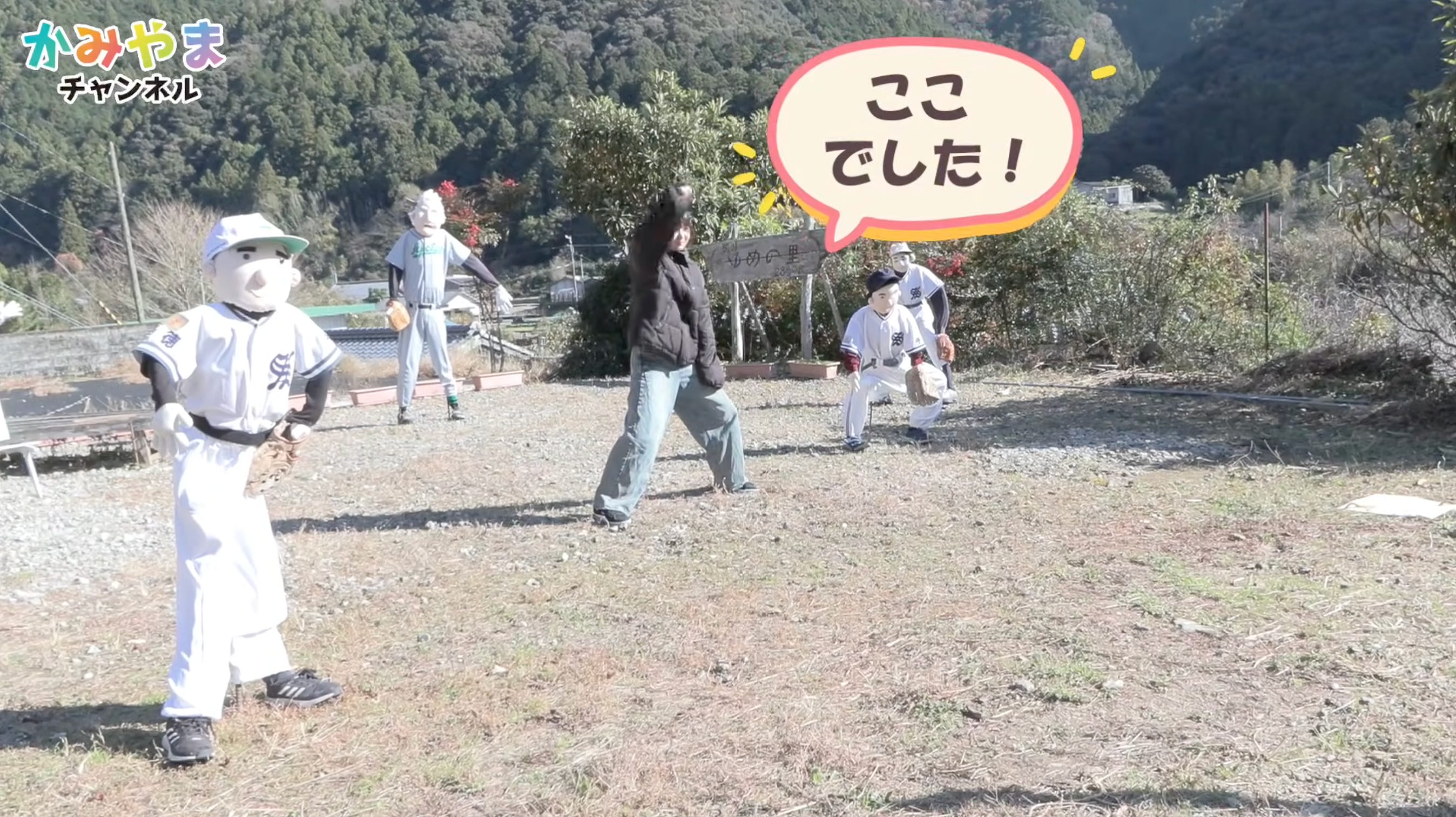
I walked into their office thinking they wanted to expand their practice. I saw that their YouTube videos were getting decent views, their app had a few users; most people in the town didn’t even know about it. Someone told me people who received tablets from Circle weren’t even using Circle software, they were going straight to YouTube to watch reels. I assumed Circle wanted to get the whole town on the app and change this, right?
I sat down with the person running Circle, Komegata-san. Shota-san and Itou-san had joined me to help translate and learn more for themselves. I’d come prepared with what I thought were helpful questions. How do you increase adoption? What’s the path to the whole town being on this?
He looked at me and said something that Shota-san translated to, “Our software is not necessary for those who don’t need it.” He wasn’t apologizing for low adoption. He wasn’t asking for help growing. He’d drawn a boundary around who the tool was for and he was fine with the people outside it.
Circle’s goal isn’t total adoption, it’s intergenerational connection. The point was simply to give the people, most at risk of isolation, a way in. That’s it.
Less than an hour later, I saw what that meant. I jumped in the car with Mayumi-san, one of Circle’s tech support staff, and we drove out to a farmhouse to troubleshoot a tablet. The man who met us at the door had been farming this land for longer than I’ve been alive. He led us to the living room where his wife sat underneath a heavy blanket, a kerosene heater glowing beside her. He gestured for us to sit and we all got under the blanket together. Big smiles cracked through where words couldn’t. Mine, because I barely spoke the language. Mayumi-san’s because the technology was not cooperating.
The tablet turned out to be more than a user error. The hardware was broken. Mayumi-san took it back to Circle’s office to diagnose. I kept thinking about what that screen meant to that couple. It was their window into a community that was becoming increasingly difficult for them to access. It wasn’t a perfect replacement. It was just a way to still be a part of things when the distance between their house and the rest of the town was growing.
As we left, the old man pressed a ziploc bag of dried persimmons into my hands. They were nothing like the leathery ones I’d had before. These dissolved like powdered sugar, the sweetness melting across your tongue. He told me to come back around. I carried that sweetness with me for the rest of the day.
Nikolai tended rather than built. Circle tended and built, but within limits. It seemed neither was trying to reach further.
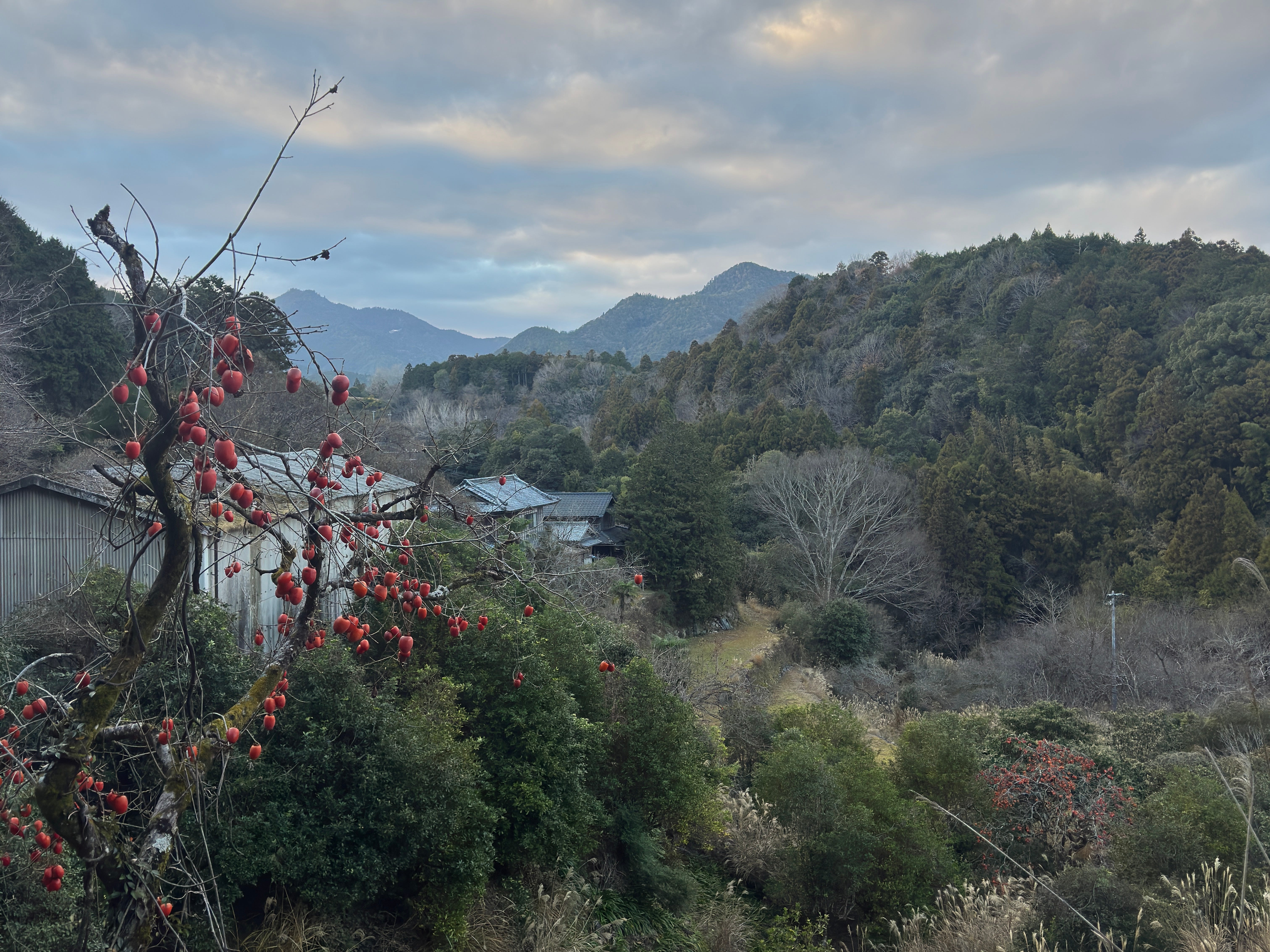
On one frosty morning, Shota-san, Itou-san, and I went with some volunteers to clear an empty house, an akiya. We spent the day cleaning out a previous owner’s possessions so someone new can move in. At Apple, Shota-san’s work disappeared into systems too large to see the edges of. Here he could see every edge. The edge was a door frame with a blessing hung above it. The edge was a cabinet full of trinkets from someone’s life.
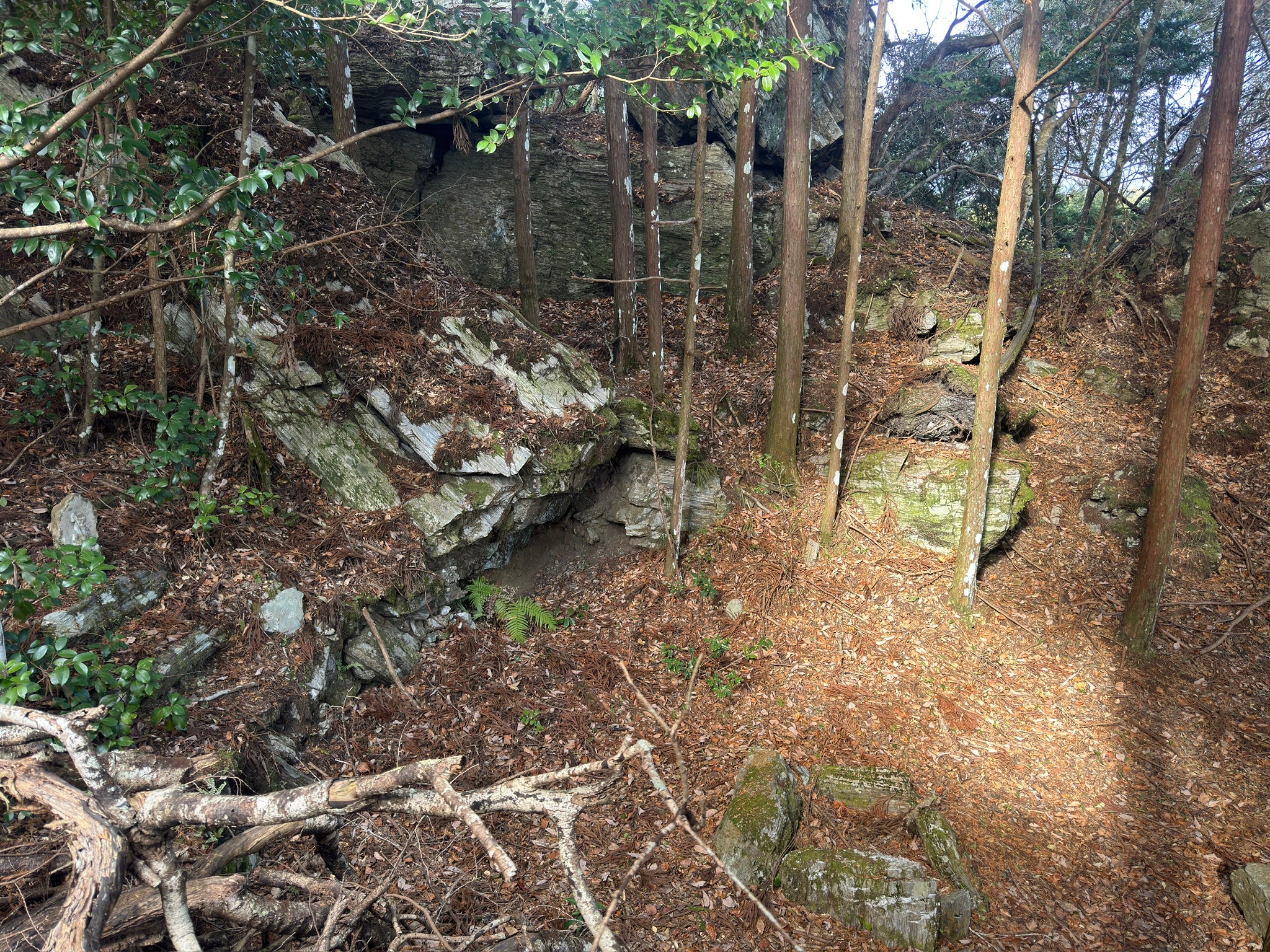
We found a completed pilgrimage stamp book, every page stamped, 1200 kilometers around the entire island of Shikoku, 88 temples. Now the book sat in a house being emptied by strangers. Itou-san told me these are common among the houses they empty.
It’s easy to write about creative depopulation as something beautiful, but someone finished that pilgrimage and then their house emptied out. There was a lot of ongoing loss in this valley.
We kept clearing, box after box, cabinet after cabinet, most things destined for the landfill. We were all tired, a long day of sorting through what once was.
I found bottle rockets in a cabinet and handed one to Shota-san. He lit the fuse and just looked at it, not pointing it outward. “No, no, no, no, point it out!” I yelled as the fuse sizzled. His wrist flicked. Boom! Louder than anyone expected, it launched above the valley we overlooked. Itou-san snapped something in Japanese and Shota-san immediately started apologizing. I felt bad because it was my idea and Shota-san almost lost an eye. But the jolt cracked through something. The heaviness of the afternoon gave way to a gratitude for the mundanity of this work. I went to bed wanting to write a book about knowing someone through their possessions.
On my last day, I went to the onsen early in the morning, a completely different cast of characters. The evening regulars were replaced by people I’d never seen. The same 680 yen, the same rhythms, I went through the motions slowly, letting each one register. The minty sting of the soap, the heat entering my bones like a language I’d only just started to understand, the cold plunge, the balcony, the river. I was sad — not for anything dramatic — just for the loss of a rhythm my body had only just learned.
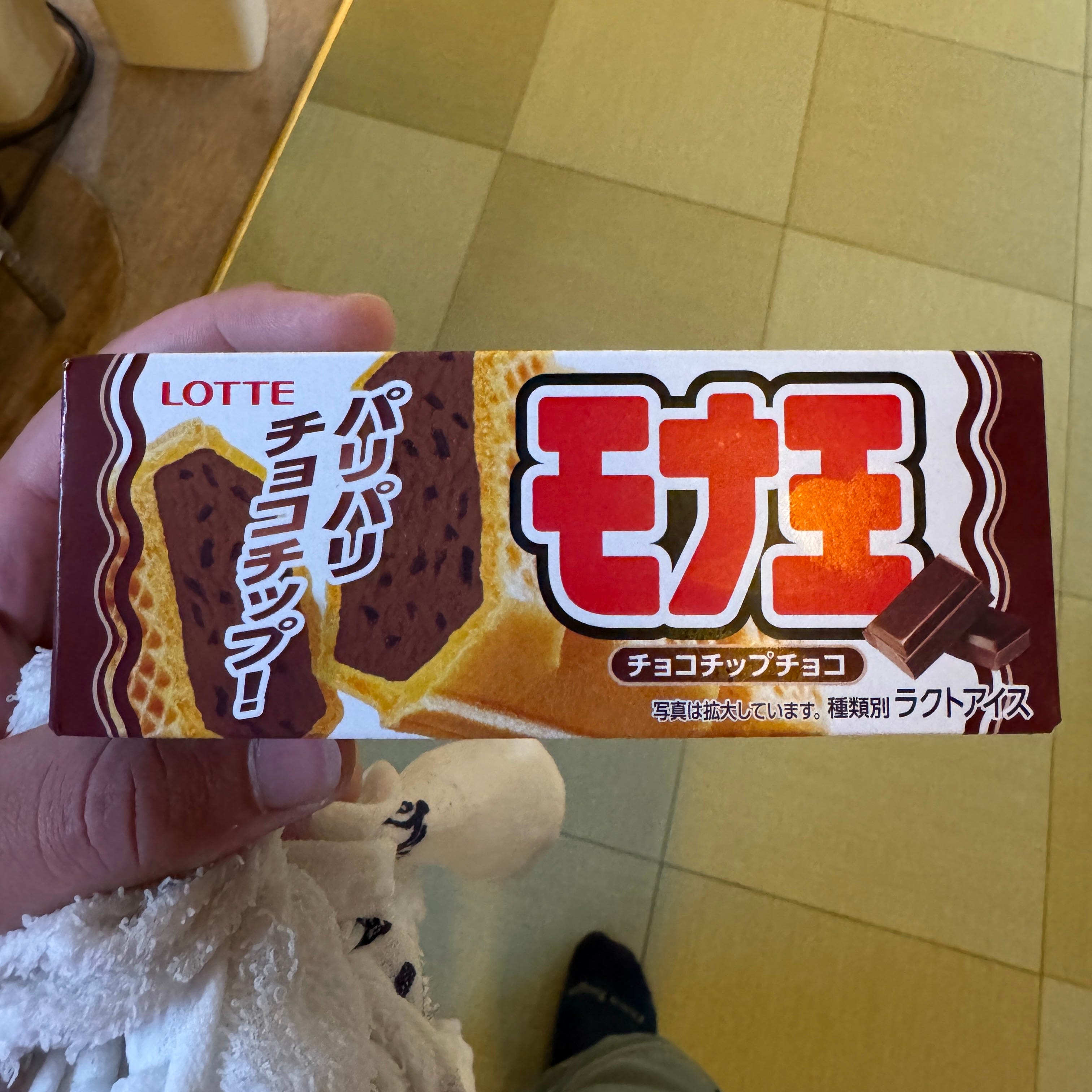
I got my usual ice cream waffle from the vending machine on the way out. It tasted divine as always. The sweetness stayed in my mouth as I rode the bus to Osaka.
I left Kamiyama having picked up garbage, sat in hot water, emptied out some houses, and learned the basics of dry stone walling. I ate mikan that the cold had made sweet and persimmons that dissolved like powdered sugar and I’d hardly spent any time on my computer building things.
I’d come looking for social technology. What I found was that the tools mattered less than the showing up.
The onsen would open again tomorrow. Nikolai would send another email. The mikan would keep sweetening as the winter wore on.
Every day I was in Kamiyama, the valley got a little bit smaller and a little more full. And I’m not sure those are different things.
Much love from Ahangama,
Dan