I’ve been quiet on this blog for a few months. Half-finished posts about projects in India, returning to Japan, hosting a hackathon, and other thoughts rest in my drafts.
Earlier this year, writing for an audience, I reached a point where I wondered: is writing about experience a flight from it?
Probably yes. Probably not always. It was enough to stop me publishing for a while. Douglas Hofstadter calls the self a strange loop, the pattern a mind makes by perceiving itself. Writing for an audience sharpens that loop in a particular direction: a self narrating each moment toward the version I’d later tell. I wanted to dull that edge, to keep a private journal but stop performing my life back to myself in the middle of living it.
As I enter the final few months of the fellowship, I have a bit more time to sit and reflect and write and remember. What follows has been compiled on buses and trains and planes in the months since March, when I spent about a month in Sri Lanka.
Sri Lanka
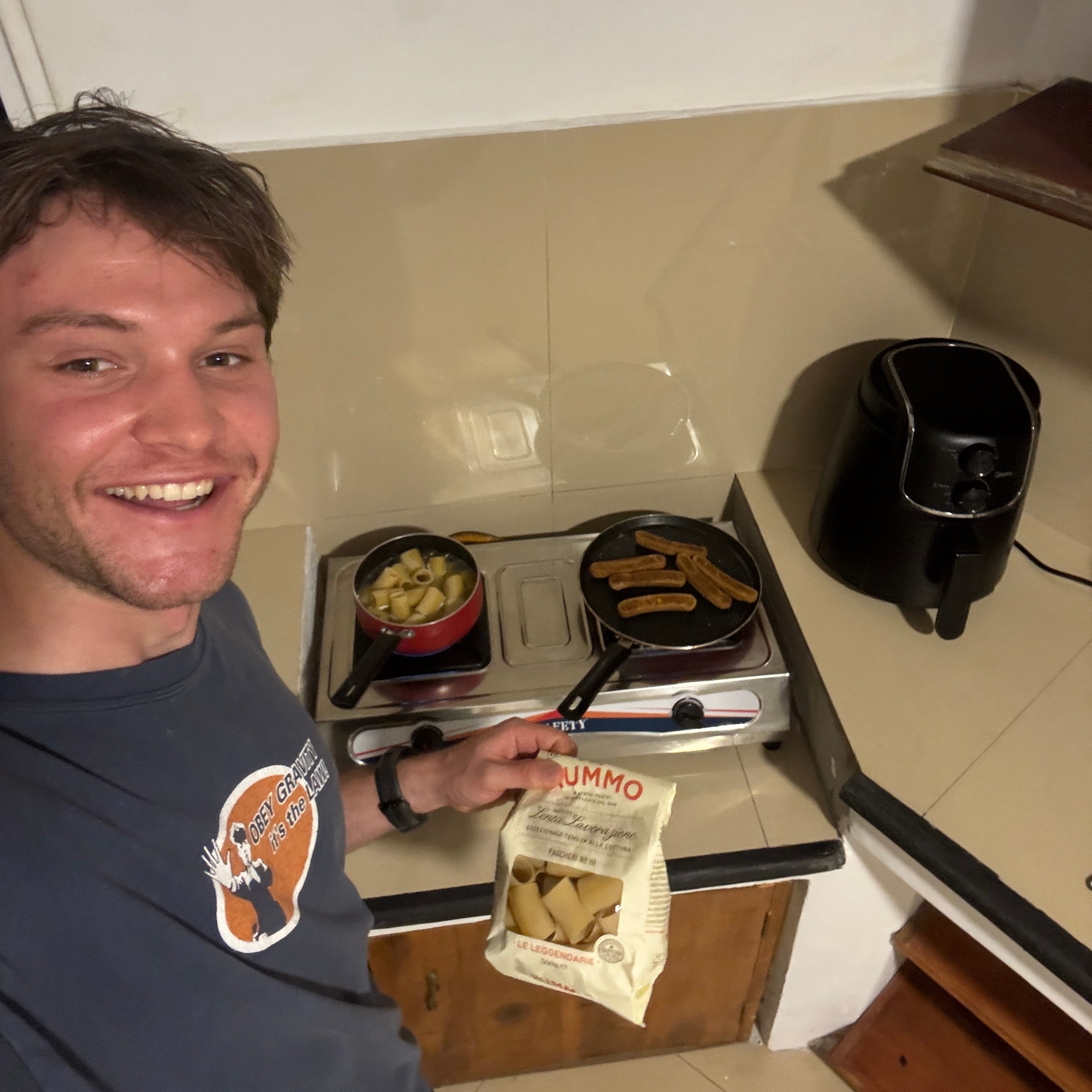
“Hallo carbonara boy,” one of the Germans would always say, as the three of them marched up the stairs with surfboards in hand and sand on feet.
I had never been much of a carbonara person before this, but spending a month above a shop in southern Sri Lanka, refining variations of the dish with whatever protein I could find, changed that. It’s probably not a nutritionist’s recommendation for what you should eat every night of the week, but getting the ratios and timings right (eggs to noodles to heat) makes it very satisfying. To my German flatmates’ delight, or so I hope, most evenings our shared kitchen smelled as though a carbonara candle were burning.
I had come to Sri Lanka from Japan in early March to work with digital rights organizations. I had a list of meetings, an onward flight to India, and a curiosity about how the country had built tools for civic voice in the years since the Aragalaya.
Aragalaya means “the struggle” in Sinhala, the name for the 2022 uprising when an economic collapse left Sri Lanka without fuel, food, or medicine and crowds eventually stormed the presidential palace, driving out the Rajapaksas, the political dynasty that had dominated the country for much of the previous two decades. The movement ran heavily on social media and left behind a brief flourishing of digital activism.
But the first few meetings taught me the orgs had lost the momentum they’d had right after the protests, and one of the few people I did meet advised me to be careful working in these spaces as a foreigner. This dampened my spirits.
On top of that, immediately after landing in Colombo, the capital city, I had the worst food poisoning of my life that emptied me out for a week.
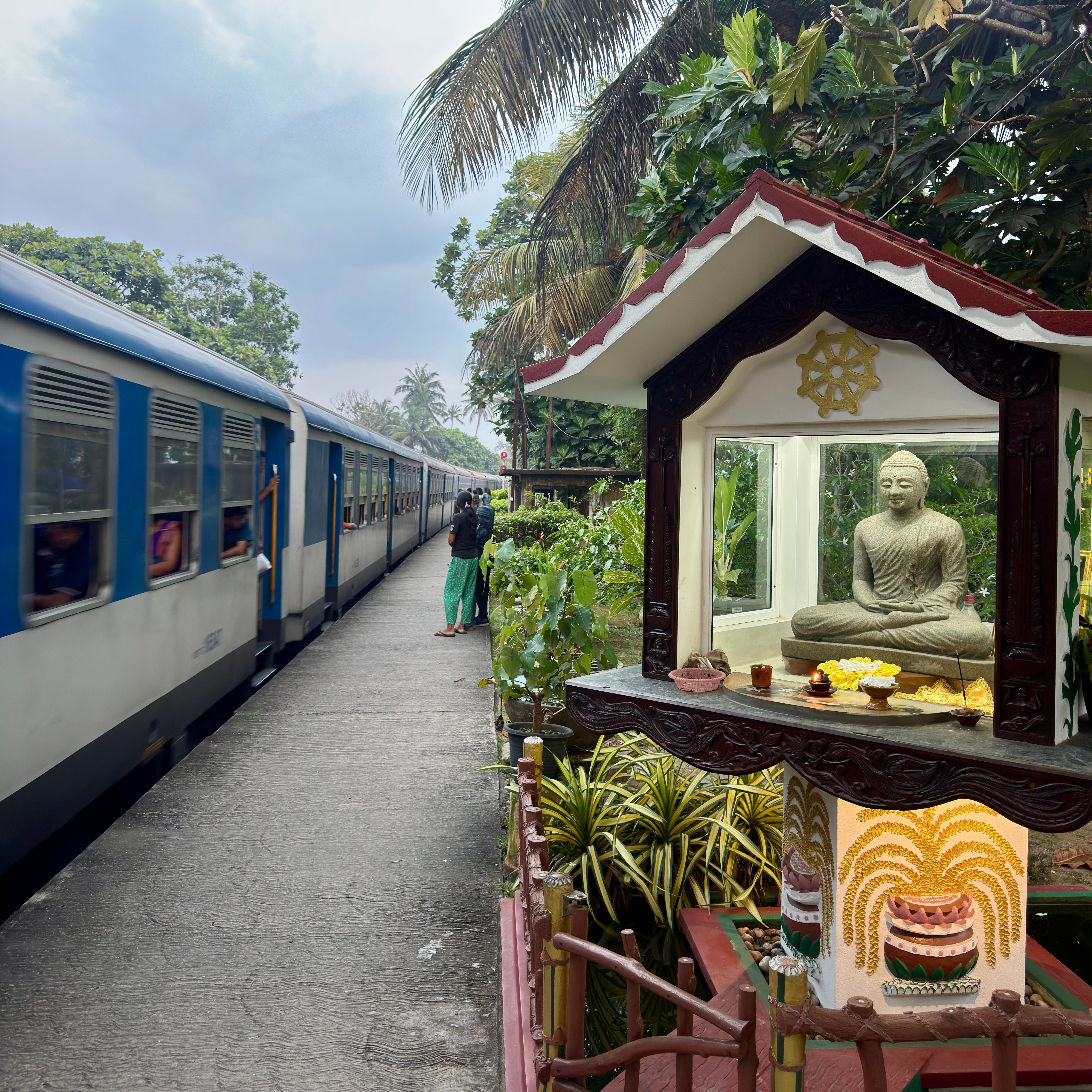
So, in an effort to catch my breath and collect my thoughts, I took one of the famous blue trains south and walked through the streets of Ahangama to a shop run by a man who I will call D, where I rented a room upstairs by the week.
D and I were speaking of local oil prices rising, and whether the US might torpedo another Iranian ship, when his mother rose from her plastic lawn chair at the back of the shop and started down the stairs toward the entrance. I looked in her direction. D stopped talking, ran over to her, and asked her in Sinhala where she was trying to go. She wanted to walk out for some bread. He asked why she would do that when they have bread right here in the shop. She looked back at him with a stare stuck in confusion. She’s losing her memory, he explained afterward, and sometimes she successfully wanders off into the streets of Ahangama, the town she and D have spent much of their life in.
Ahangama is a lower-key surf town near the southern tip of the teardrop shaped country. Twenty years ago no tourist would have touched it, as with most of Sri Lanka. The country was at the end of a twenty-six-year civil war between the Sinhala-majority state and the Tamil Tigers, a separatist insurgency in the north, an ending with thousands killed and little accountability. D told me stories of gunfights on the same street where his shop now sits. He pointed out bullet holes in a wall across the street. “It was safer here than in the north, but still scary,” he said.
The Sinhala-Tamil divide might be the country’s longest standing, but it isn’t the only one. The Muslim minority, distinct from Tamils and historically a small trading community on the island going back centuries, has been the target of a more recent strain of Sinhala-Buddhist nationalist violence. Most of Sri Lanka’s digital rights crises have lived on that fault line.
In March 2018, anti-Muslim mob attacks broke out in the central region around Kandy (in Sri Lanka’s tea country). Hate speech spreading on Facebook had whipped up the mobs. At the time Facebook had only a couple Sinhala-speaking content moderators worldwide, and both of them lived outside Sri Lanka. People died. Mosques burned. The government blocked Facebook for ten days. Facebook formally apologized in 2020:
We recognise, and apologise for, the very real human rights impacts that resulted.
In April 2019 came the Easter Sunday bombings. Coordinated suicide attacks on churches and hotels killed nearly three hundred people. Anti-Muslim riots followed in May. The government blocked social media three separate times that month.
Citing social media’s role in enabling this kind of violence, the Wickremesinghe government passed the Online Safety Act in early 2024. Ranil Wickremesinghe had become president after the Aragalaya forced out the Rajapaksas, but he was no clean break from them. He was a longtime ally, kept in power by their party, which still held the parliamentary majority. So the law restricting online speech came not from the reformist government the uprising had hoped for, but from the old establishment holding on. It created a five-member commission, appointed by the president, with the power to declare online statements “false” or “prohibited” and to impose prison sentences of up to five years on those who post them. Digital rights orgs have warned it could be used to silence dissent rather than protect minorities.
The question of how to govern speech online without empowering the state to silence its critics is unresolved.
The Web
Across the street from D’s shop was a cafe called Sundays. I ate a kimchi rice bowl there almost every day, extra kimchi, extra chili. It turned out to be a productive place to work, and sometimes, if I was lucky, there were people playing guitars or DJs. I sat there for hours pushing my Rhythm Lab project, which over those weeks morphed from a social platform prototype into something closer to a digital museum of social technologies and their design affordances (I look forward to sharing it eventually). Reading back through my journal from those days, I was craving someone to think these things through with. The cafe was the closest substitute, though for most of the people there social media was a great thing, often the reason they’d come to Sri Lanka instead of Bali. Sometimes I felt a little sheepish, critiquing what for many of them was, in fact, a convivial technology.
I became friends with a guy who worked at Sundays named Sasa, who has helped start several of the businesses near the cafe. Every morning his goofy smile brought out mine. Some evenings he took me along to play pool with his crew, all of whom worked a cue like a wizard’s wand. I contributed by losing with great consistency.
One night, riding on the back of his scooter, I asked Sasa what he thought about social media’s effect on Ahangama. He said Instagram was great. It drives tourism to the town. “Why should we change it? It’s allowed me and others to grow businesses and find financial stability.”
I thought about asking him about the recent accounts of tourists harming sea turtles by trying to ride them, and the other environmental harms that arrive with the crowds, but decided that was a conversation for another time.
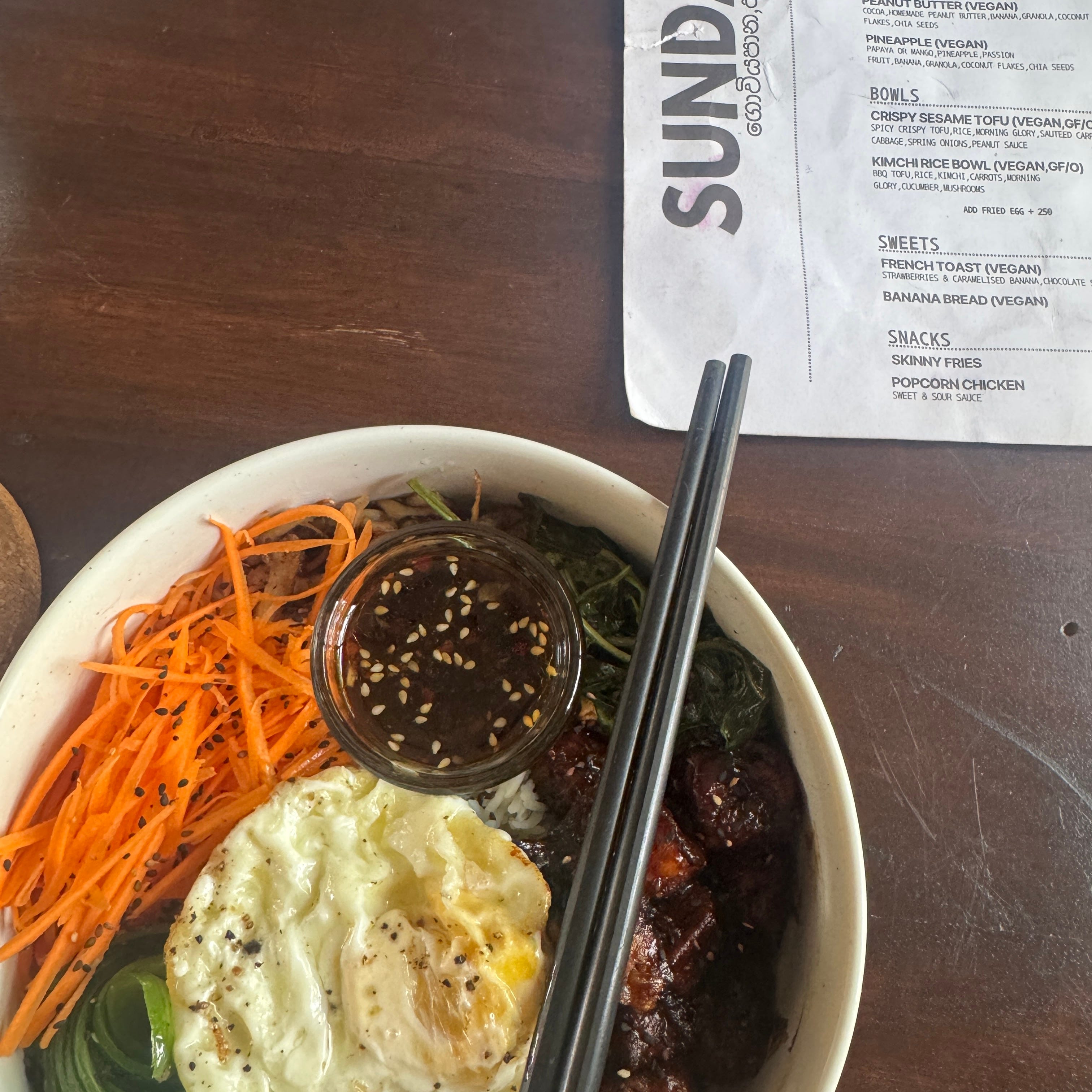
At Sundays I read, and thoroughly enjoyed, a book by the media theorist Jakko Kemper called Frictionlessness. It’s about the design philosophy that runs modern Silicon Valley: make everything seamless and instant so the technology disappears into the background. One-click checkout, infinite scroll, a photo of a wave in Ahangama landing on a feed in Melbourne with no pause in between. Kemper’s argument is that this seamlessness has a cost, and that the cost is hidden by design. The smoother the surface, the less the user sees of what holds it up: the labor, the extraction, the harm, much of it landing on places like the one the photo was taken in. Sasa’s Instagram is frictionless in exactly Kemper’s sense. It brought him a livelihood, by attracting tourists from all around the world. Somewhere out of frame, it also brought the tourists who harm the turtles.
That hidden cost was very much in line with thinking I’d been doing earlier in the year about deliberately designing friction back into social technology.
But in Sri Lanka I also began to think about how frictionlessness hides something beyond cost; it hides a space’s shape. You stop being able to feel how big the room is, or to tell whether anyone is keeping order in it. And once a social technology’s edges disappear like that, it has become what I’d call unbounded, which changes everything about how it can be governed.
A bounded social technology, by contrast, is one whose limits you can perceive: you can tell who is in it, who keeps order, and what it is for. An unbounded one is built so those limits recede; the audience becomes unknowable, whoever governs is invisible or absent, and the purpose becomes growth. The key point is that this is not the same as size. A dinner table is small and bounded. A protest movement can be enormous and bounded. The question is whether the edges are perceptible, not how far away they sit.
This matters because of how each kind gets governed. The political economist Elinor Ostrom shows how bounded communities can manage shared resources well on their own, without the state and without privatizing everything, and that the first condition for it is clearly defined boundaries. When a group can see its own edges, it can make and hold its own norms.
The legal scholar Lawrence Lessig has the other half. His famous line is that code is law: the architecture of a space governs behavior as surely as any written rule. A street with no benches decides who sleeps there. A feed that shows you your follower count decides how you post. This is true everywhere, bounded or not, so the question is never whether the architecture governs. It is what the architecture governs toward. A small room with visible membership turns your attention to the people you can see and the norms you share with them. A feed built for unlimited reach turns it toward performing for an audience you can’t see, and tells you nothing about who, if anyone, is keeping order. Bounded and unbounded technologies don’t differ in whether their design shapes behavior. They differ in whether that design leaves a group able to govern itself, or leaves a gap that has to be filled from outside.
Put the two together and the picture sharpens: architecture decides whether Ostrom’s conditions can hold at all. A design that makes edges perceptible affords self-governance. A design that erases them forecloses it.
When a social technology goes unbounded, when the edges recede, once you cannot see who you are reaching or who is in charge, self-governance doesn’t work because there is no perceptible community left to hold a norm. One option is to leave the gap as it is, and call it free speech. But a space without perceptible edges and without moderation isn’t actually free; it just hands power to whoever can game the algorithm hardest. The 2018 Facebook situation in Sri Lanka was this case. No community small enough to hold a norm, no moderator paying attention, and the loudest voices set the temperature. People died.
So on large-scale social technologies, moderation has to be added from outside the architecture, by a company or a state. That external moderation is the slippery part. It can keep a space healthy, the way the per-instance moderators on various emerging federated social technologies are experimenting with, essentially by building small bounded communities inside a larger network. Or it can curdle into authoritarian control. The hard line between healthy disagreement and dangerous incitement gets drawn differently by a moderator who lives in the community and one who answers to the government.
Surfing
I did a lot of reading and thinking and sleeping in Ahangama. Early in the mornings, though, before any of that, I would head down to the beach.
It was my first time surfing outside of South Africa, and my first time on shallow breaks where wiping out might mean an unpleasant encounter with whatever was below. The water was warm. My cracked rib from a few months before seemed healed enough. I sized down, tried out shorter boards, found my balance or not. I worked on my wave reading, my pumping, my turns. I also got better at buying and selling boards. If you’re careful you can hardly lose any money which is far more economical than renting. Unfortunately I dinged my board and had to take a bit of a hit.
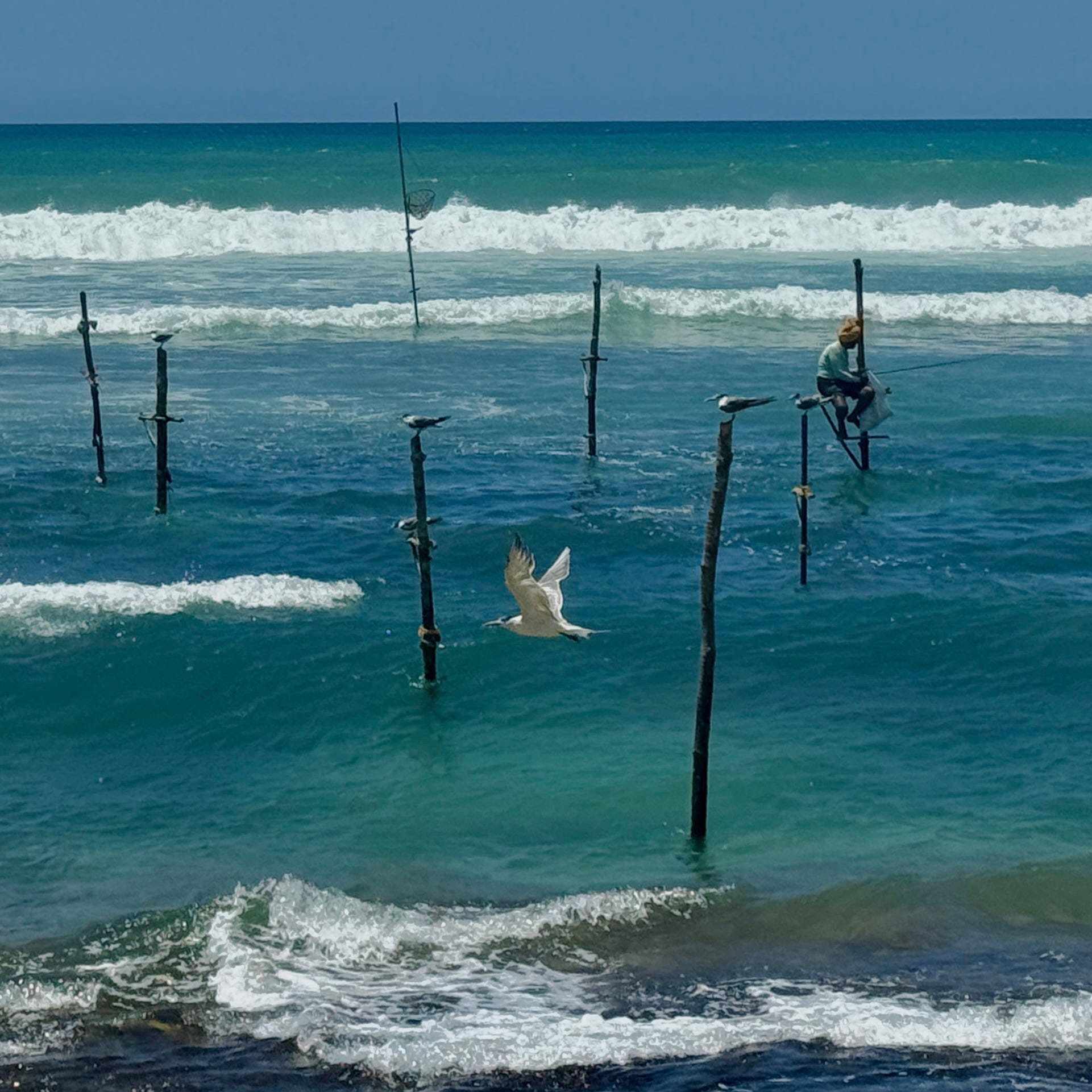
The lineup was diverse. Sri Lankans mixed with the Australians and Europeans who flock to the southern shores for months at a time. The shouts when a set comes in are something like bird calls, in three or four different accents. Most people in town were passing through for a week. I felt out of place in a strange way.
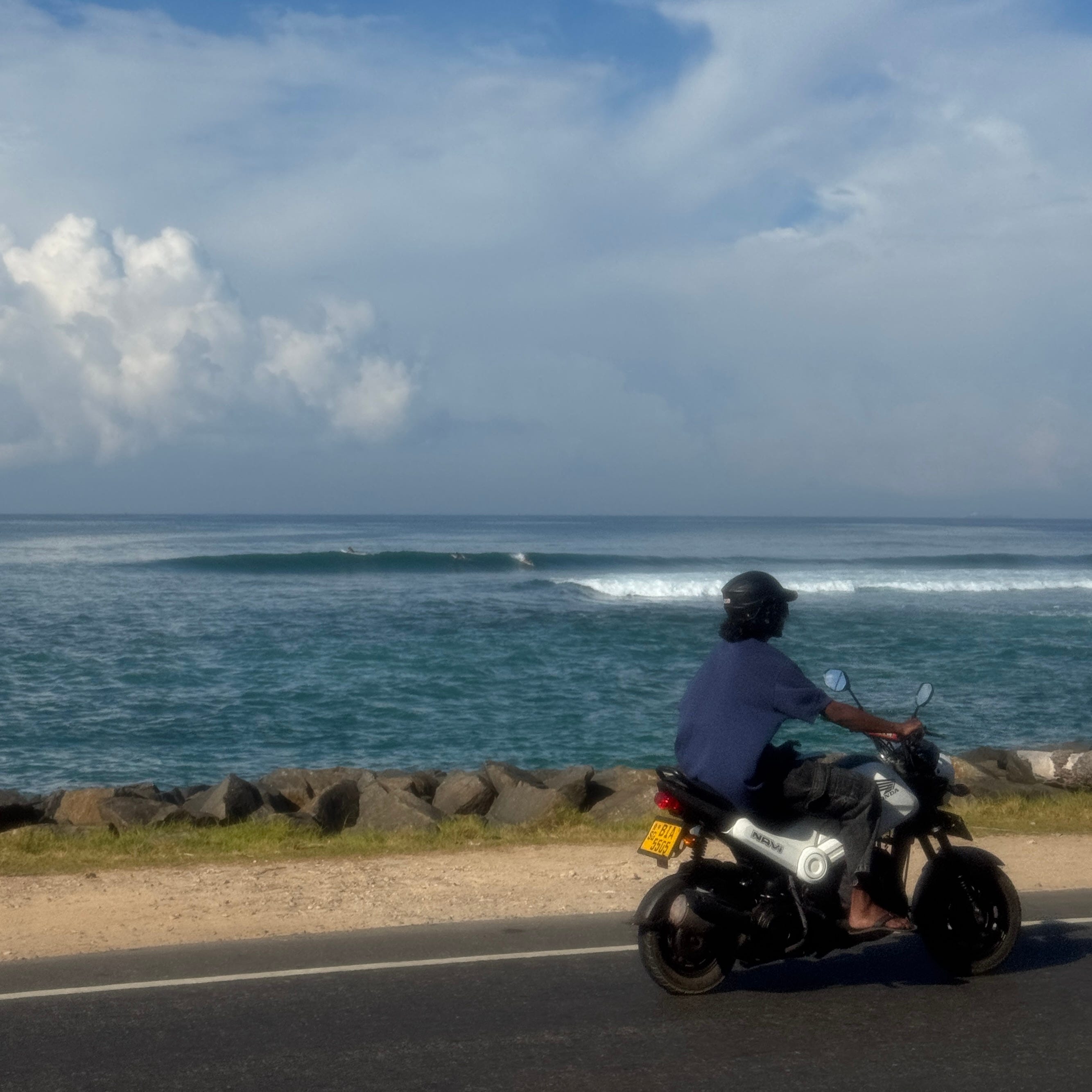
I squirm at the notion of being lumped into the digital nomad crowd, but in Ahangama I was about one beach chair away from it. A guy with a laptop and a surfboard in an affordable and beautiful country, working mostly from a screen. That image bothered me.
I think it bothered me because I had come to be useful to the digital rights work, to get my hands dirty in it. The longer I stayed, the more I understood why I’d been told to be careful. A foreigner inserting himself into another country’s political struggle, however well meaning, is its own kind of exoticism. The work belongs to the people whose lives are actually on the line.
However, spending my days taking Zoom calls and coding less than a hundred meters from the beach felt like I had given up. It was too comfortable. I’d come into this fellowship expecting to be uncomfortable. In hindsight, though, the discomfort of being too comfortable led to learnings I’d never have received if I’d fully obeyed my internal resistance to digital-nomadding.
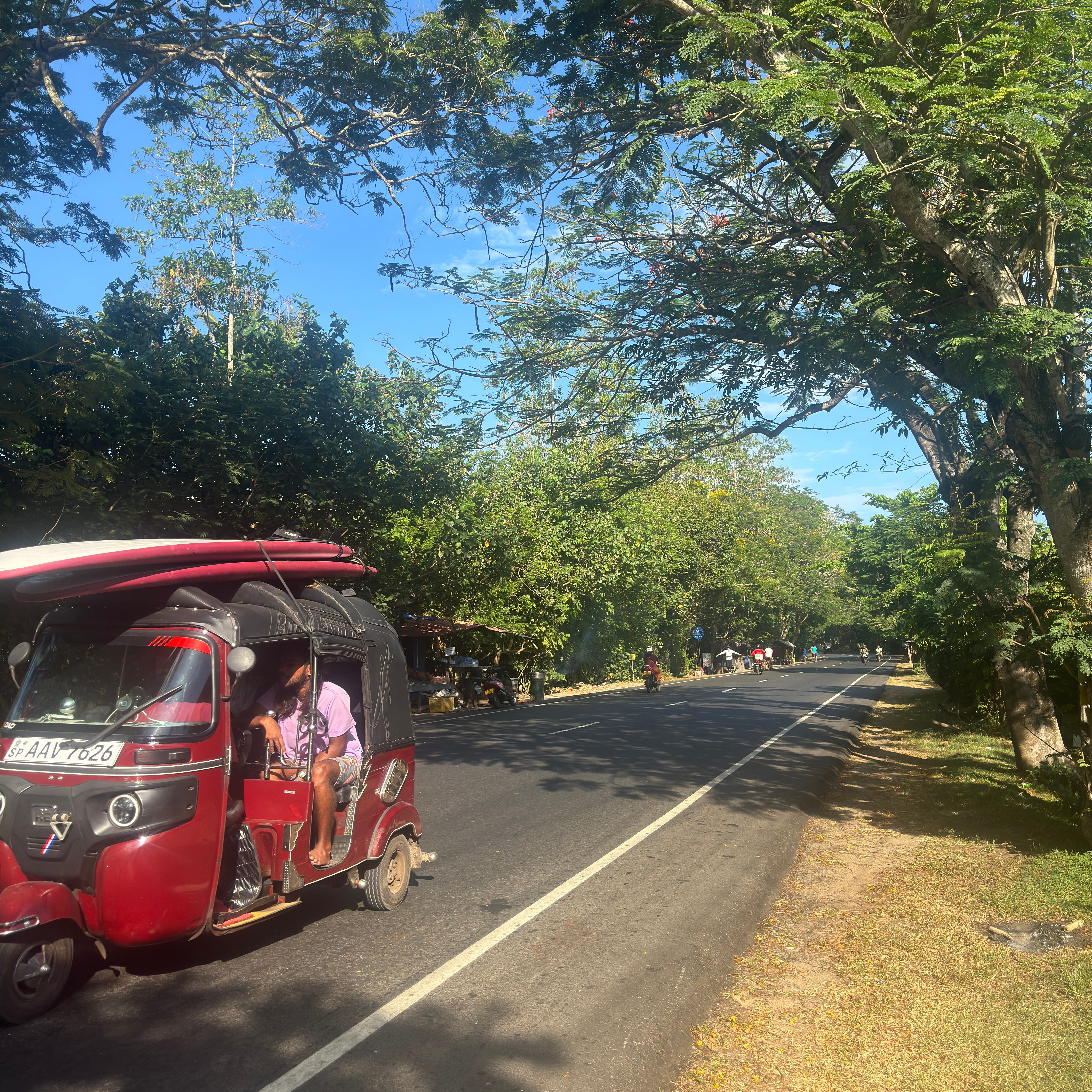
Certain friends of mine wince a little when I tell them I’ve been surfing. Being a surfer comes with connotations they don’t love, and some I should probably be wary of myself. In most of the spaces I’ve occupied this year I’ve been the only one who lights up about sports like surfing or cycling or trail running. These kinds of sports, paired with the way I look and talk, often lead people to read me as a bro. I’ve spent a lot of energy monitoring that, managing how I came across, trying to be thoughtful about it. I was afraid of what being a bro might mean.
Leaning into my natural broness this year is partly just giving that up. There’s a feeling of community that comes naturally when you stop being in your head about how you’re being read and just be you. This year has been a good time to bask in that.
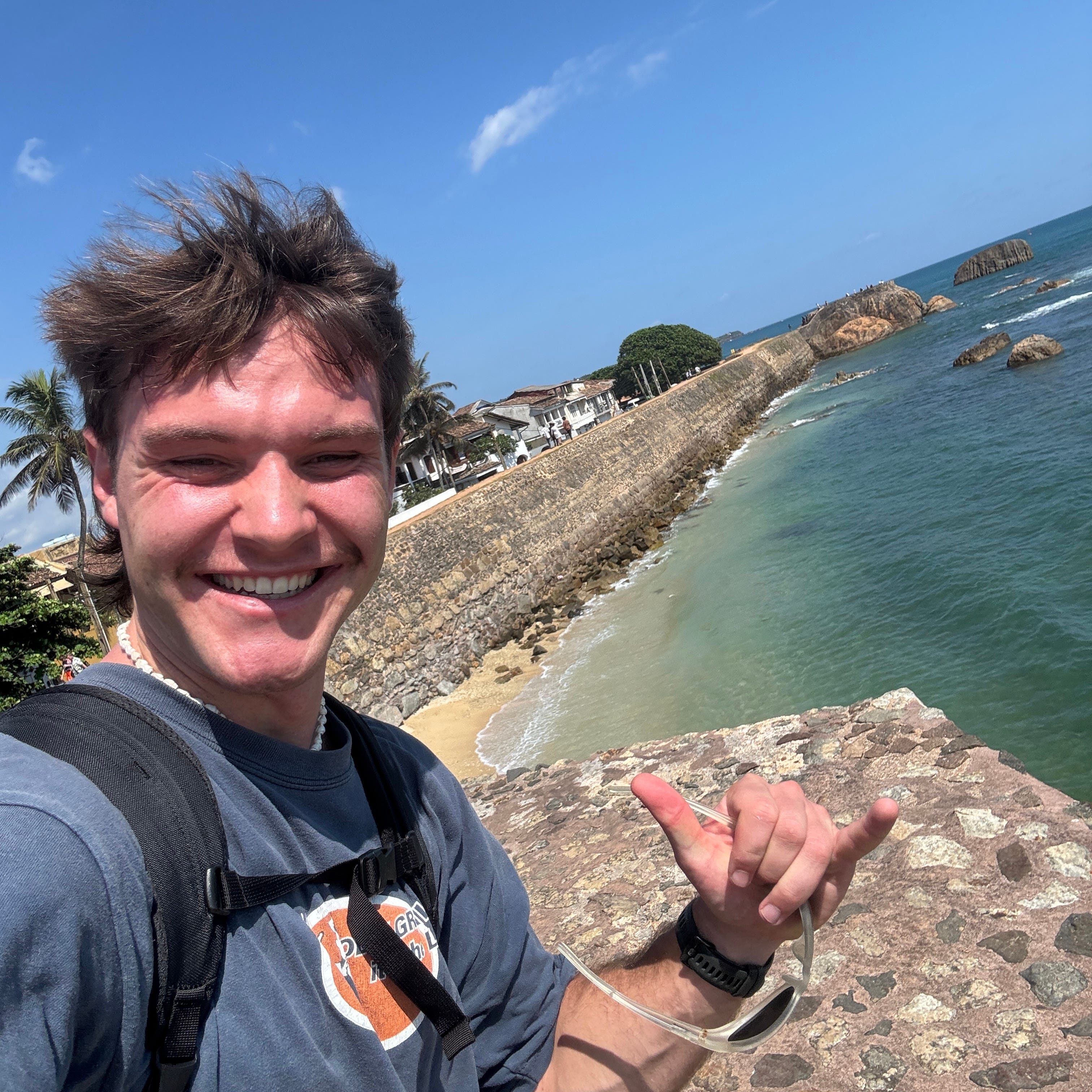
Early on in Sri Lanka I attempted to grow a mustache for the first time in my life. Puberty gifted me a lot of bodily hair, but the area above my lip has remained sparse. In Sri Lanka it started to speckle. What grew was less a mustache and more two corners of one, the hair filling in at the edges of my mouth and refusing to commit at the center. I ended the era about two months later where from across the street, optimistically, I had a mustache. Up close, it was a strong rumor of one.
I also adopted Australian surfer hair. I let it grow into a low-key mullet that with time became a high-key one. A month surrounded by these guys rubbed off on me.
If you’d asked me a year ago whether I’d have a (attempted) mustache and a mullet and have really come to fancy surfing, I’m not sure I would’ve known what to say.
I am bro. The work isn’t to apologize for the person I am, it’s to be him with care.
This fellowship keeps giving me data points on who I am and how I like to live, and on how both shift depending on where I am. The southern shores of Sri Lanka are one of them. After that came a hackerfarm in rural India, then a return to the countryside of Japan, and now a farming commune in Denmark. Exploring the ecology of social technology is a journey I’ve only really just begun, and this year has given me the confidence it’s an inquiry I can keep fiddling with for many years to come.
Much love from Skibby,
Dan